JointGain helps guide the knee joint better during movement. Especially when turning, climbing stairs and under variable load, users often experience more control. This supports functional movement rather than forcing it.
Home › Health › Knee Support
Storytelling landing
When your knee sets the pace: the full story behind JointGain
This is a long, honest story about a problem that rarely develops overnight. Knee complaints often start small, creep into your routine and eventually influence how you walk, work, exercise and plan. JointGain was developed for exactly that moment: when you are not looking for big claims, but for practical support, stability and compression that makes your day manageable again.
Important legal notice: the story on this page is a fictional, illustrative scenario intended as
marketing communication. It is not personal medical advice, a diagnosis or a treatment recommendation.
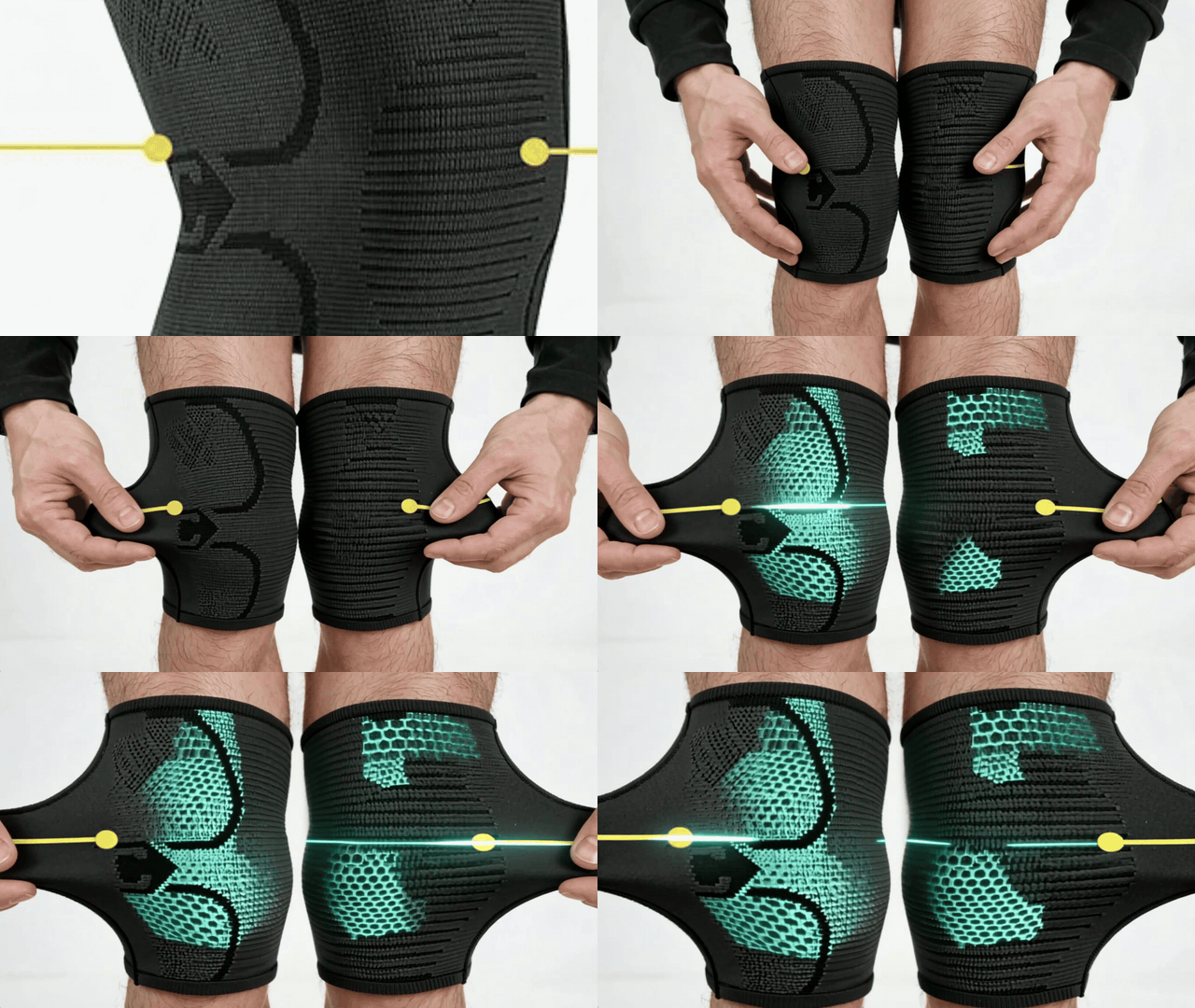
This opening segment sets a clear visual context: what happens around the knee when load builds up over time. This helps you understand immediately why support matters not only for sport, but also for everyday moments like turning, getting up and climbing stairs.
30-day guarantee
Free delivery
Adjustable fit
In stock
1) The problem: not one big complaint, but a hundred small limitations
In our fictional example we follow Emma, 39 years old, living in Johannesburg. She works four days a week in an office, does light strength training twice a week and tries to stay active on weekends with her family. Her life is not extreme, not sedentary and not elite sport. That is exactly why she does not recognise the signals as a pattern at first. She calls it "a bit stiff" and carries on.
It starts on Monday morning, during the first minutes of her commute. She steps off the Gautrain, turns towards the stairs and feels a brief moment of uncertainty in her knee. No acute pain, but a reflex: turn a little more carefully, take slightly shorter steps, a little more tension in her upper leg. A week later the same thing happens. Then again. And then on more occasions.
At the office she sits for long stretches in meetings. Getting up after 45 minutes feels stiffer than it used to. Not dramatic, but enough to change her behaviour. She more often chooses a seat closer to the exit so she has to turn less between chairs. She parks a little closer on days with many appointments. She takes the lift instead of the stairs and calls it "saving time", while she knows it is mostly comfort.
The real impact lies in those subtle behavioural adjustments. Not what you can no longer do, but what you unconsciously start doing differently. Emma notices she prefers to split her shopping bags rather than carry one heavy bag. She turns her whole body when looking behind her. She plans her day with extra rest blocks, not because she is tired, but because her knee feels uncertain after a series of movements.
On training days the pattern becomes clearer. Light exercises go well, but with lateral movements or unexpected direction changes her knee feels less "secure". Not always painful, but often unstable. As a result she trains more cautiously, loses rhythm and builds less confidence. She still moves, but with the brakes on.
An important point in these situations: people often search too long for "the perfect cause" before doing something practical. Emma did the same. She alternated between rest, a loose sports bandage, temporary adjustments to her training and periods without support. Some days went fine, others less so. The problem was not that nothing worked, but that nothing was consistent enough for her daily life.
That is exactly where many people get stuck. Loose bandages shift. Solutions that are too rigid are uncomfortable to wear for long. Complete rest helps temporarily but does not fit an active life. And just trusting "I'll see how it feels tomorrow" means you keep reacting instead of providing targeted support.
After a few months it is not the knee itself that frustrates Emma most, but the mental effect. Before every activity she first thinks: "How does my knee feel today?" That costs energy. She does not want to stop moving, but she also does not want to overanalyse every step. She is not looking for a medical miracle or aggressive marketing promises. She is looking for predictability.
And this is the core of the problem that JointGain addresses: people often do not need spectacular claims, but a reliable aid that supports their daily load without becoming complicated. A brace you do not wear just once, but that genuinely becomes part of your routine.
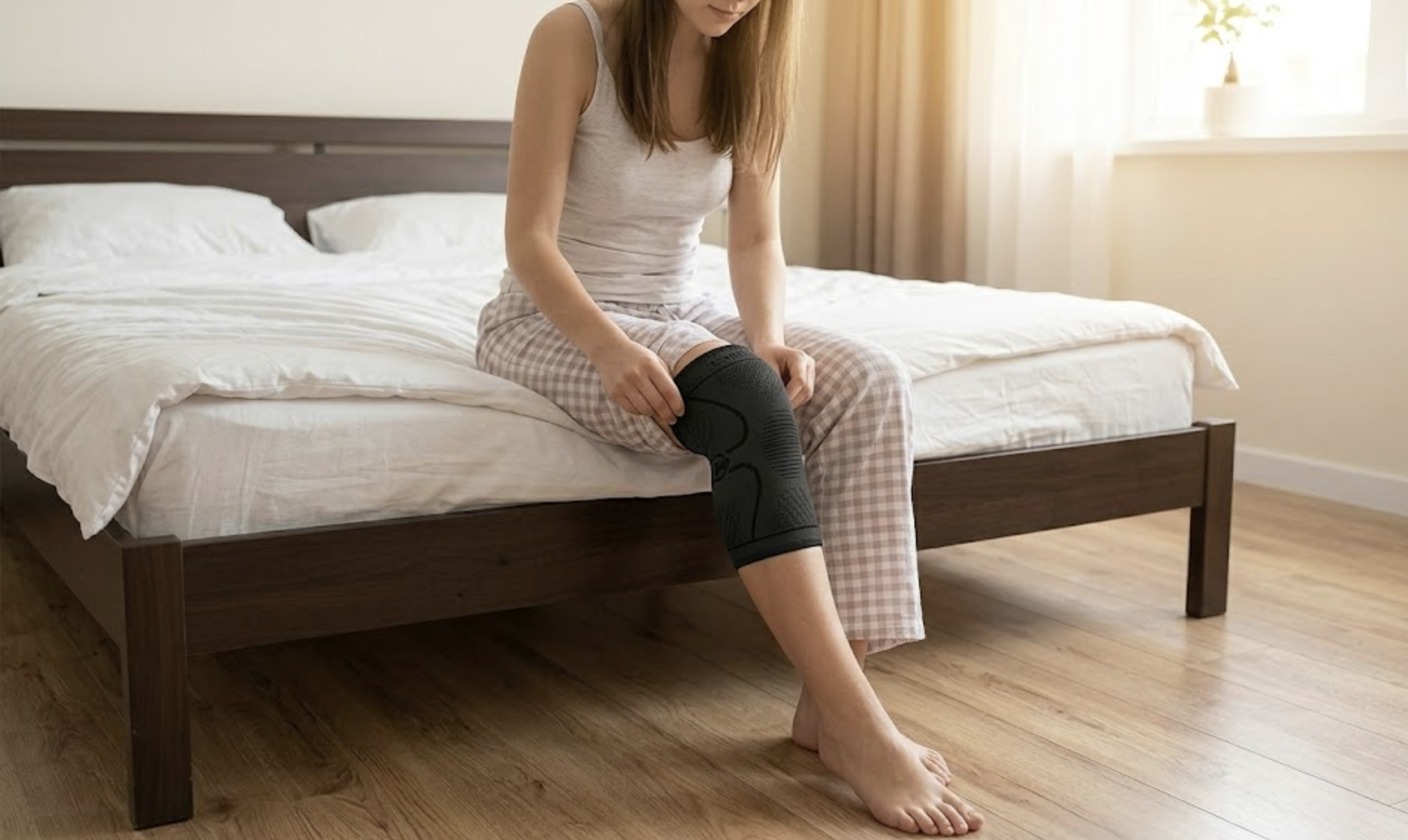
In conversations with users the same sentence keeps coming up: "I just want to move normally again without thinking about it all the time." That does not mean ignoring complaints. It means smart support at the moments that matter: getting up after sitting, climbing stairs, standing for long periods, turning, walking, building up training, and still having enough confidence left at the end of the day.
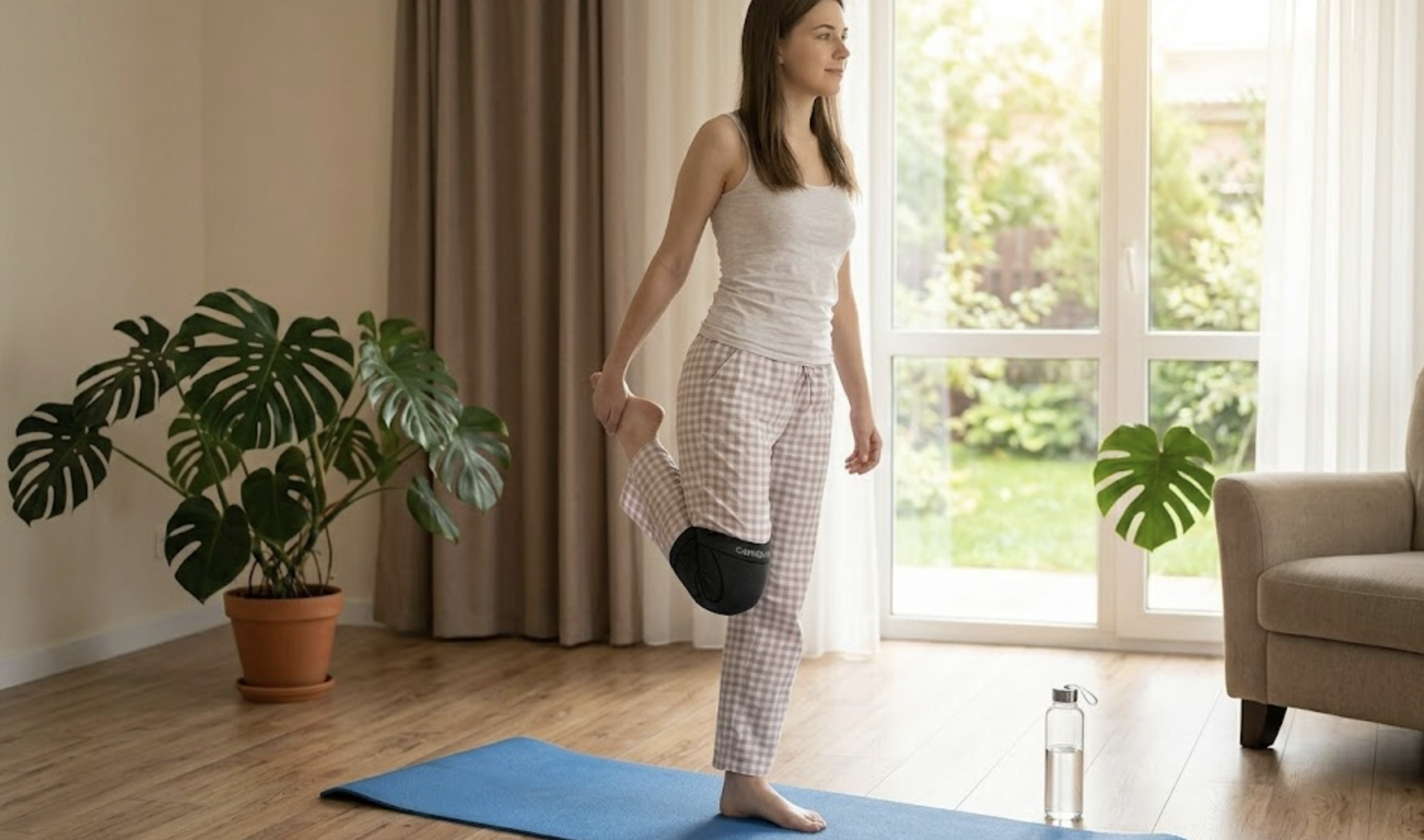
When you take that seriously, your question changes from "What cures everything immediately?" to "What helps me move functionally today?" That second question is far more realistic and ultimately far more valuable. It is also the question with which the JointGain story truly begins.
In Emma's story this became extra clear on a regular Wednesday. She had no sport planned — just a normal day: commute, office, supermarket, cooking, a short evening walk. It was precisely on such an "ordinary" day that she noticed how many separate moments put strain on her knee. Not one peak, but a chain of small triggers. And that is exactly where she had been getting stuck: there was no aid she could keep using effortlessly throughout the whole day.
Many people recognise this pattern only late. Initially it seems logical to wait: "it will probably pass". Then come small compensations: bending less deeply, shorter steps, a little less turning, a route with fewer stairs. On their own these choices are sensible, but together they signal that support is missing. When you ignore that signal, the day becomes unnecessarily tiring.
That is why lasting change often begins not with an extreme measure, but with a consistent aid. Something you use at the moments your knee normally starts to protest: after sitting, during turning, when picking up pace or in the last part of the day. The goal is not "perfect", but "stable enough to get your rhythm back".
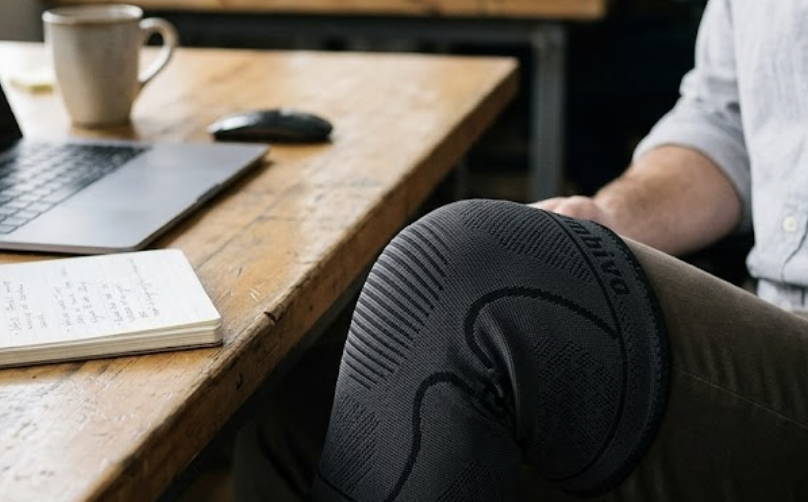
If you experience persistent complaints, clear swelling, sudden instability or increasing pain: consult a doctor or physiotherapist.
2) How we arrived at a solution: from scattered attempts to a clear framework
The road to a practical solution did not start with design, but with observation. Over several weeks Emma kept a simple diary with three questions: when does her knee feel most uncertain, which movements make the most difference, and what makes support actually sustainable to maintain throughout a whole day. That sounds simple, but that very simplicity gave direction.
From that diary four firm requirements emerged. One: the support had to be immediately usable without a complicated process. Two: the fit had to be adjustable, because morning, work and sport all demand different intensity. Three: the material had to be comfortable enough that she would not want to take it off after two hours. Four: how it works had to be honestly explainable without medical overclaiming.
With those criteria many options were automatically ruled out. Solutions that are firm but not breathable tend to stay in the drawer. Solutions that offer mainly comfort but little stability miss the functional goal. Solutions that work well for one context but not for the rest of the day break your routine. And without a routine there is little result in real life.
The turning point came when Emma stopped searching for "perfect" and started searching for "reliable enough for every day". That is precisely the difference between incidental help and a structural aid. A product does not need to do everything; it needs to perform consistently well in the situations that come up most often.
JointGain is built on that principle. Not as a medically replacement system, but as a daily support layer. The aim is not to make professional care unnecessary. The aim is to provide a stable foundation for movement, training and work demands between medical appointments and normal days.
During development much attention was paid to practical details that are often underplayed in marketing: how quickly can you put the brace on when you are in a hurry, how easy is adjustment without a mirror, does the brace stay in place during repeated steps, how does the material feel under clothing, and can you adapt the support without starting over.
During this phase Emma deliberately tested in varied circumstances. She wore the brace during a morning with many transfers, on a day with long sitting blocks, during a short home workout and during a weekend hike on uneven terrain. Not to "prove results", but to check whether the aid remained usable under realistic conditions.
The outcome of those tests always came back to the same question: does the support stay predictable when the day is unpredictable? If the answer to that question is yes, confidence grows. And that confidence translates directly into behaviour: less hesitation, less overcompensation, more natural movement without constant internal debate.
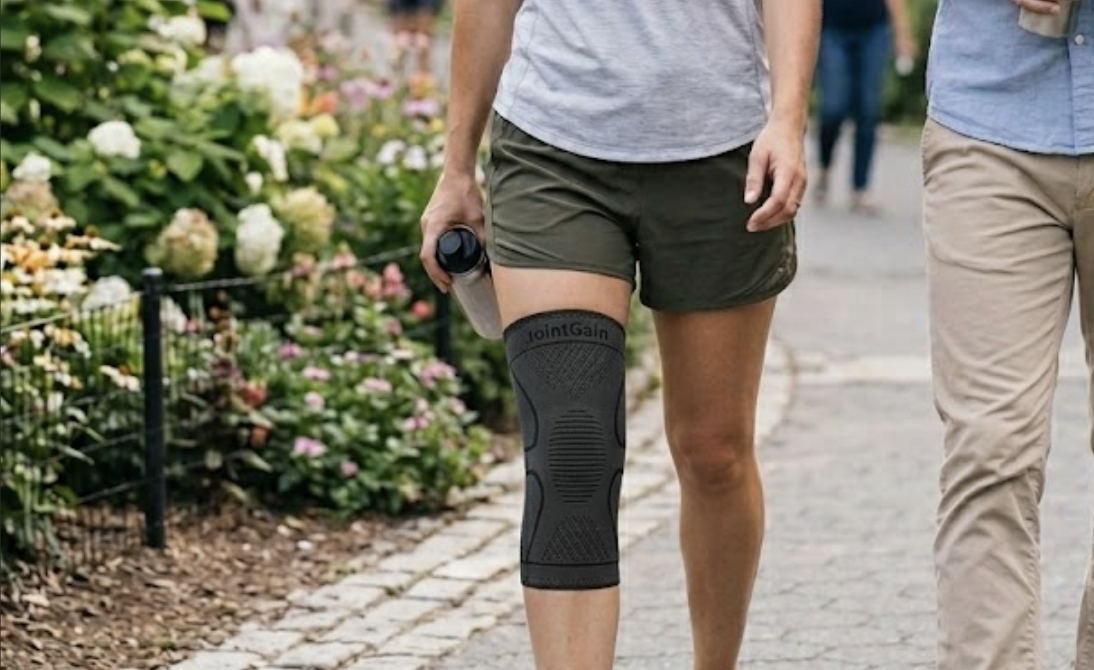
A second important insight from this phase: a good brace must leave room for nuance. Not every activity requires maximum tension. Sometimes light support is enough, sometimes you want more hold. That ability to fine-tune proved essential for using JointGain not just occasionally, but every day.
By taking those questions seriously, not a "spectacular" solution emerged, but a usable one. And that is exactly what Emma needed. On Monday she uses the brace differently than on Saturday. During office hours she chooses less tension for comfort. During training she chooses a little more support for control. One product, multiple contexts.
This phase is important in the story because here lies the difference between theory and practice. Theory says: support is good. Practice says: support only works if people keep wearing it. That is why this section is not about big claims, but about applicability. And applicability is ultimately where confidence comes from.
This segment follows later in the flow and shows concretely what JointGain looks like in use. This sequence keeps the storytelling logical: first insight into the problem area, then the practical application of the brace in a real movement context.
After four weeks Emma did not note "everything is solved", but something far more useful: less mental strain around daily movement. That sounds small, but in practice it means a great deal. Less doubt when climbing stairs. Less hesitation when getting up. More focus on the activity itself rather than on whether her knee will cooperate today.
And precisely there the story becomes credible. No miracle curve, no fictional medical claims — but a clear shift: from reactively dealing with knee uncertainty to proactively supporting at the moments that count.

3) The solution: what JointGain concretely does and why it works in daily life
JointGain works on the basis of three pillars that complement each other: stabilisation, compression and comfort. Each pillar has its own function, but the added value lies in the combination. Stabilisation alone without comfort often leads to too-short wearing time. Comfort alone without stabilisation delivers insufficient confidence under load. Compression alone without adjustability lacks flexibility.
Even compression around the knee area gives a supportive feeling and helps distribute load more comfortably during daily and sporting activities. This contributes to a more consistent wearing sensation throughout the day.
Breathable material and an adjustable fit make extended wearing more realistic. The lower the barrier to use, the greater the chance that you will use the brace consistently at the relevant moments.
To make it practical, you can divide use into three daily phases. Phase one: morning and commute, focused on a smooth start and controlled movement. Phase two: work and daily routines, with emphasis on comfort and stable support during repeated steps. Phase three: training or evening activity, with a firmer setting for dynamic load.
This model is not a fixed rule but a useful framework. It helps users link adjustment to context. And context is everything with knee support: what feels comfortable during quiet desk work can be too light during training. What works well during intensive sport can be too firm during long sitting blocks. JointGain is designed to bridge that difference.
In practice you can translate this into a simple decision moment per activity: "Do I need mainly comfort right now, or extra control?" That one moment of adjustment makes use more purposeful. This way you avoid moving too long on the same setting while your load changes throughout the day.
Emma used a simple routine for this: adjust briefly before leaving, check after lunch, tighten slightly before training if needed, and return to a more comfortable setting after exertion. No complicated protocol, but a repeatable approach that makes the brace part of her ordinary day rather than an isolated "aid moment".
Extended practical benefits
The benefits below may seem familiar, but gain real value only when you connect them to actual situations. That is why each point states not only "what", but especially "when" and "why".
Support during sport
During exercises with repeated knee load, extra stability can help keep movement controlled. Think of running, functional training or field sports with many direction changes.
Help during recovery
During a phased return to activity a supportive brace can contribute to confidence, as long as this fits within your own plan and any professional guidance.
Daily comfort
Much knee load arises outside sport: walking between appointments, standing for long periods, lifting, climbing stairs. Precisely there consistent support often delivers the greatest practical gain.
Adjustable fit
By adapting the setting to the activity you keep control over support. This makes one brace usable in multiple contexts without constantly switching solutions.
Breathable material
Wearing comfort determines wearing time. A breathable design helps you wear the brace comfortably for longer, even on days with lots of movement.
Easy to use
Quick to put on and immediately adjustable lowers the threshold for daily use. This increases the chance of consistency and therefore practical value.
What connects these benefits is not marketing language but rhythm. Once an aid moves with your rhythm, it stops being an "extra task" and becomes part of how you organise your day. That is also why the best feedback on this type of product rarely revolves around big words. People say things like: "I think about it less" or "I plan my day more normally again." Precisely those sentences are valuable.
For Emma this meant, among other things, that on Friday evening she no longer had to choose between rest and social life. She could do both, with an adjustment in intensity. That sounds small, but anyone who has lived long with knee uncertainty knows that such choices determine the quality of your whole week. Support that helps with that has practical impact that goes beyond a single activity.
Demonstration in two steps
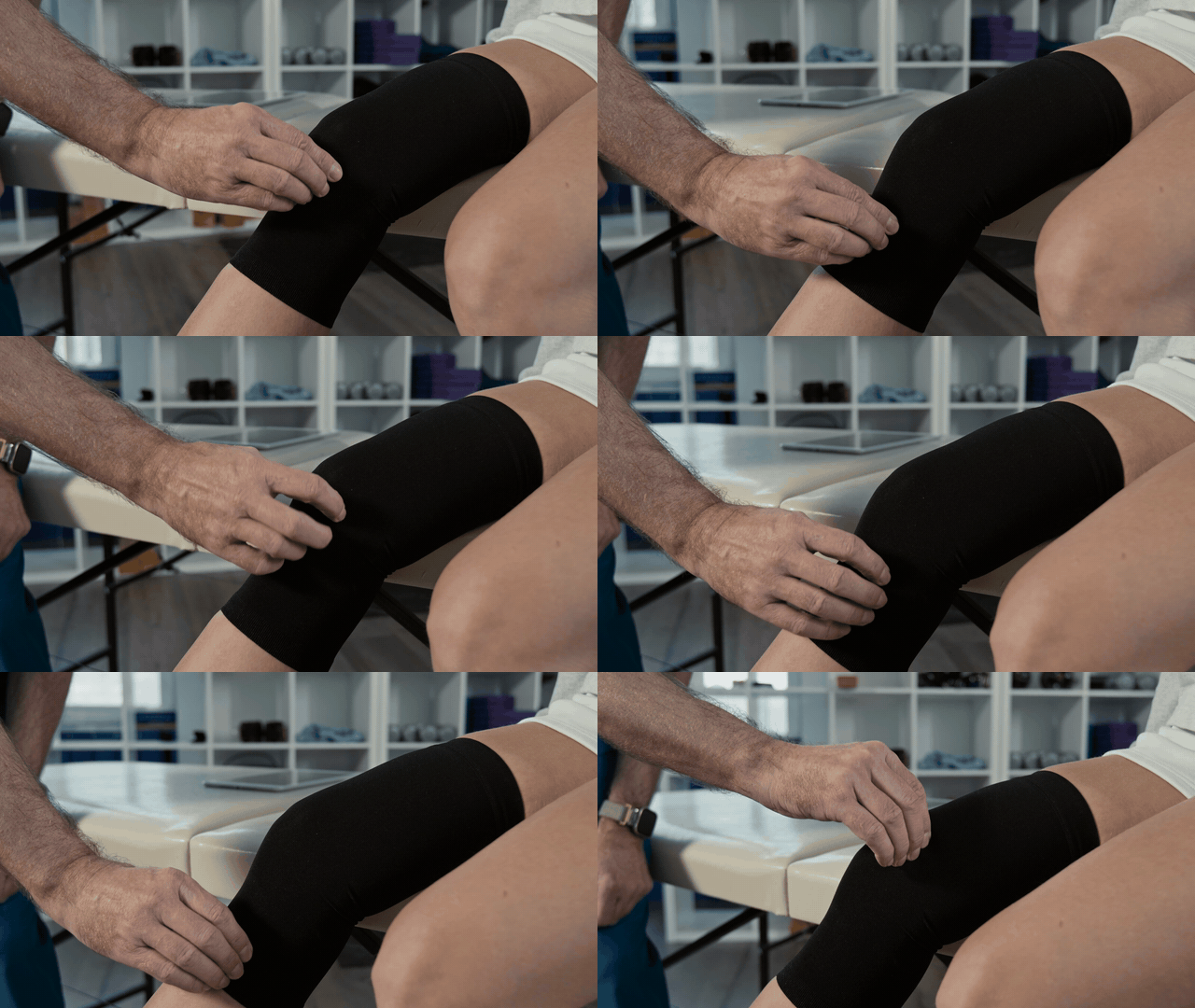
A good landing page shows not only claims but also application. That is why the demonstration is split into two logical steps: first how to put the brace on correctly, then what that looks like during real activity. This makes expectations concrete and prevents misinterpretation.
This step is important for the rest of the story: putting it on correctly determines how well the support fits your knee. A brace that is well positioned does not feel like a loose extra layer, but as a functional part of your movement.

Then you see use in motion. That difference between "putting it on" and "actually using it" is essential: a product can look good in isolation, but the real value lies in how it performs during your normal, repeated daily actions.
Practical scenario without testimonials
Reviews have been completely removed from this page. Instead this section is set up as a neutral practical scenario: how a user plans a week with support without claims about recovery or exceptional results.
Monday: mainly support during commuting and office. Tuesday: extra adjustment for a short training session. Wednesday: lighter tension during an administrative day. Thursday: more walking between locations, with focus on consistent support. Friday: regular work day with stair moments. Weekend: longer walk with a stable fit.
The value of this schedule lies in simplicity. Not every day carries the same load, so not every day requires the same setting. JointGain supports that pattern because the fit remains adjustable and the brace is designed for multiple usage moments in one week.
Honest comparison of options
This comparison is deliberately straightforward. No putting down competitors, no medical superiority claims — just clear context about usage situations.
- JointGain: immediately usable, adjustable and focused on daily support.
- Loose bandages: sometimes practical, but often less consistent in fit and pressure distribution.
- Physio sessions: valuable for guidance and treatment, but not intended as permanent daily support.
The most important starting point remains: support and professional care can coexist. JointGain is an aid for daily load. Professional care remains important for persistent or serious complaints.
Before and during use
These video sections are intended for transparent visualisation. Using comparable activities in both clips, so that the difference between without and with the brace comes across honestly and understandably.
This "before use" situation is deliberately kept neutral. Not to dramatise, but to show an honest reference point: what movement looks like without extra support in a comparable context.
In the last segment you see the same context with JointGain. This keeps the comparison transparent and narratively logical: first the starting point, then the application. This makes it easier to assess for yourself whether this type of support suits your situation.
Results vary per person and depend on, among other things, the nature of complaints, load, fit, wearing time and individual circumstances.
Price, contents and terms
Transparency is essential with health-related products. That is why this page shows a clear price, a plain contents list and explicit guarantee terms. No hidden charges and no misleading urgency.
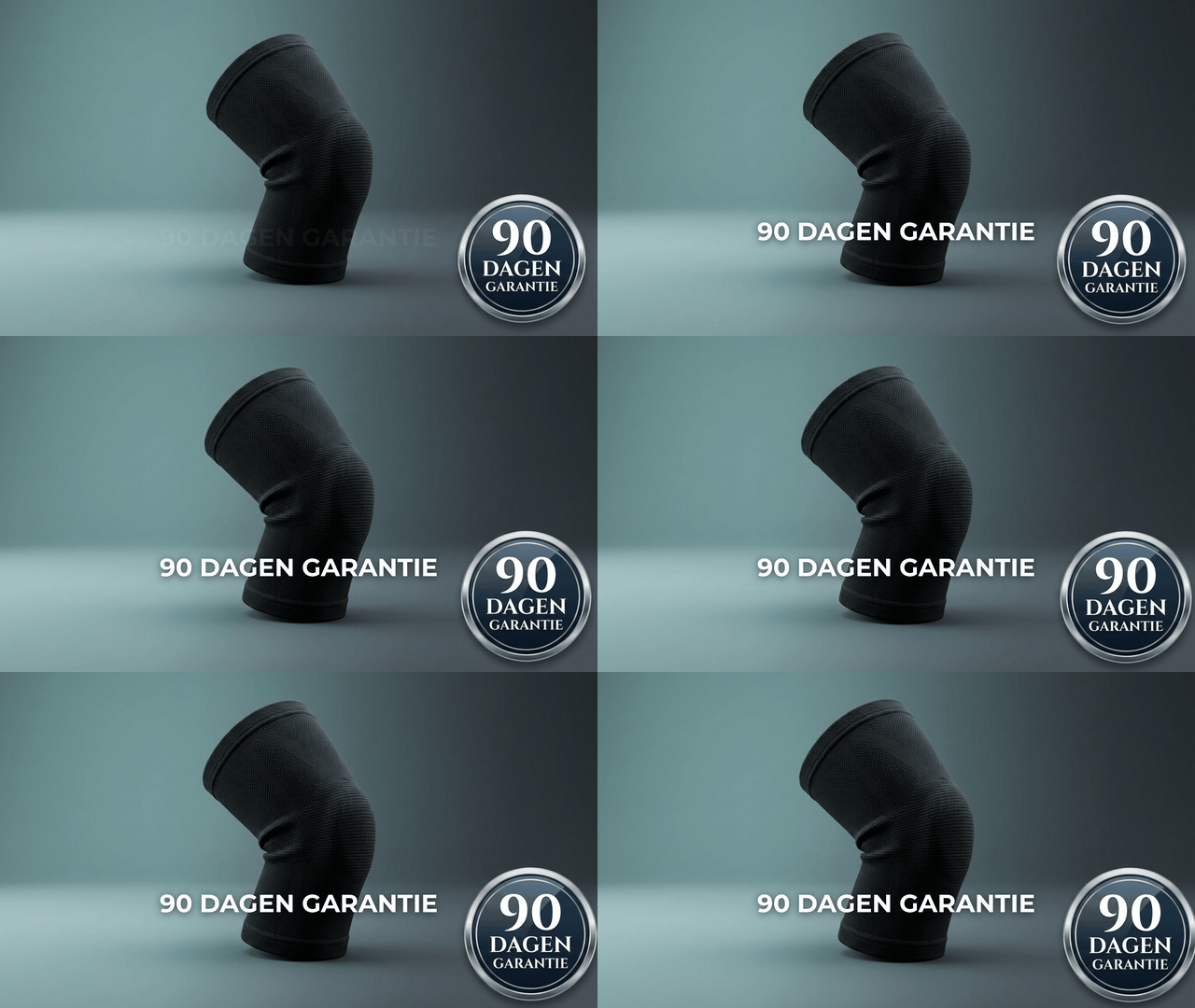
You are not buying "a promise", but a concrete aid with a clear function: support, compression and stabilisation during daily movement. You then test whether that suits your situation, with 30 days money-back.
You receive 1x JointGain knee brace with adjustable fit. Including free delivery within South Africa and a 30-day money-back guarantee.
R899
- 1x JointGain knee brace (adjustable)
- Free delivery within South Africa
- 30-day return right / money-back
- English-language support via email
Frequently asked questions
Who is JointGain intended for?
For adults who want extra knee support during sport, recovery or daily load such as walking, standing and climbing stairs.
Is JointGain suitable for multiple sizes?
Yes. The brace is adjustable, allowing you to tailor the fit to your knee and the level of support you need.
Can I wear JointGain all day?
In many situations yes, as long as the adjustment remains comfortable. Listen to your body and adjust the tension when needed.
Can I exercise with it?
Yes, many users wear the brace during workouts with knee load. Build up intensity responsibly.
How do I care for the brace?
Hand wash with mild detergent in lukewarm water is recommended. Allow the brace to air dry flat.
How does delivery work in South Africa?
Orders are generally delivered within a few working days. Exact delivery times may vary per period and region within South Africa.
How does returning work?
Within 30 days you can return the product in accordance with the terms on the terms page.
Is JointGain a medical treatment?
No. JointGain is a supportive knee brace and does not replace medical advice, a diagnosis or a treatment.
When should I consult a doctor?
With persistent or worsening pain, swelling, clear instability or when you are in doubt about your situation.
Medical disclaimer: JointGain supports with stabilisation and compression. This product does not replace professional medical advice,
a diagnosis or a treatment. Always consult a doctor or physiotherapist if you have complaints.